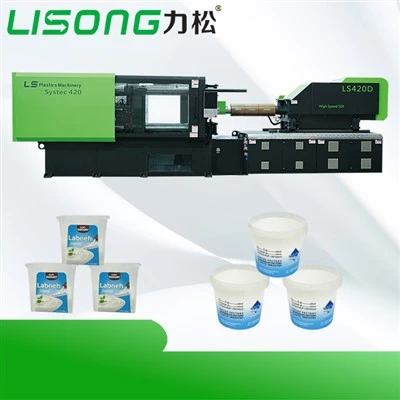
Injection Molding Machines for Industrial Plastic Production
Lisong supplies injection molding machines for plastic packaging, PET preforms, household products and industrial components. Available configurations include high-speed, precision, hydraulic and application-specific machines.
Machine selection depends on clamping force, shot capacity, mold dimensions, material, cycle time and required output. Compare the representative specifications and machine categories below, then review individual machine details or contact Lisong for an initial application assessment.
-
![Thin Wall Injection Molding Machine]() Thin Wall Injection Molding MachineThe Lisong Thin Wall Injection Molding Machine is designed for high-volume production of thin-wall plastic products. Its main applications include disposable beverage cups, lunch boxes, food...view more
-
![Plastic Cable Tie Injection Molding Machine]() Plastic Cable Tie Injection Molding MachineThe Plastic Cable Tie Injection Molding Machine is a specialized injection molding machine for producing plastic cable ties, including nylon cable ties made from PA6, PA66 and related materials.view more
-
![Plastic Bottle Injection Molding Machine]() Plastic Bottle Injection Molding MachineThe Plastic Bottle Injection Molding Machine is a specialized injection molding machine for producing PET bottles and rigid plastic packaging containers. It is developed for manufacturers...view more
-
![Plastic Food Container Machine]() Plastic Food Container MachineLISONG Plastic Food Container Machine is a specialized injection molding machine for producing thin-wall plastic food containers. It is mainly used for takeaway containers, lunch boxes, trays,...view more
-
![Plastic Cutlery Packaging Machine]() Plastic Cutlery Packaging MachineLISONG Plastic Cutlery Packaging Machine is an automated packaging machine for disposable plastic spoons, forks, knives, and cutlery sets, mainly used by tableware manufacturers for...view more
-
![Plastic Lunch Box Injection Molding Machine]() Plastic Lunch Box Injection Molding MachineLISONG Plastic Lunch Box Injection Molding Machine is designed for manufacturing disposable plastic lunch boxes, takeaway containers, meal trays, and other PP food packaging products used in food...view more
-
![Plastic Spoon Injection Molding Machine]() Plastic Spoon Injection Molding MachineLISONG Plastic Spoon Injection Molding Machine is a specialized injection molding machine for manufacturing disposable PP plastic spoons and other plastic cutlery products used in food service,...view more
-
![Plastic Basket Injection Molding Machine]() Plastic Basket Injection Molding MachineThe Plastic Basket Injection Molding Machine is a specialized injection molding machine for manufacturing plastic baskets, fruit baskets, vegetable baskets, storage baskets and other rigid plastic...view more
-
![Plastic Pen Injection Molding Machine]() Plastic Pen Injection Molding MachineThe Plastic Pen Injection Molding Machine is a specialized injection molding machine for manufacturing plastic pen parts. It is mainly used for producing plastic components for ballpoint pens, gel...view more


Representative Injection Molding Machine Specifications
|
Specification |
LS290G |
LS310G |
|
International Size Description |
2900-770 |
3100-770 |
|
Clamping Force |
3,190 kN |
3,410 kN |
|
Maximum Mold Opening Stroke |
550 mm |
550 mm |
|
Tie-Bar Spacing (H × V) |
580 × 515 mm |
620 × 510 mm |
|
Screw Diameter |
50 mm |
50 mm |
|
Specific Injection Pressure (up to 400°C) |
1,710 bar |
1,710 bar |
|
Maximum Shot Weight (PS) |
411 g |
411 g |
|
Injection Speed (at injection pressures below 1,000 bar) |
434 mm/s |
434 mm/s |
|
Electric Drive Capacity (approx.) |
99.9 kW |
99.9 kW |
|
Net Weight (without oil, approx.) |
11,000 kg |
11,500 kg |
|
Machine Dimensions (L × W × H, approx.) |
6.65 × 1.62 × 2.1 m |
6.7 × 1.65 × 2.1 m |
Comparing the LS290G and LS310G
The LS310G offers higher clamping force (3,410 kN vs. 3,190 kN) and wider horizontal tie-bar spacing, while both models share the same listed screw diameter, shot weight, and mold opening stroke.
Choose between the two based on projected part area, mold dimensions, injection requirements, and available factory space. Verify mold compatibility against the complete machine specifications before ordering.
How to Select an Injection Molding Machine
Clamping Force
Estimate the required clamping force based on the projected area of all cavities and runners, material characteristics and expected molding conditions. Verify the selection against the mold design and applicable machine specifications.
Shot Capacity
Calculate the combined shot requirements for the parts and runners. Check the required shot weight against the machine's available injection capacity and the processing requirements of the selected material.
Mold Compatibility
Check mold length, width, thickness, tie-bar spacing, opening stroke, mounting requirements and ejection arrangements. Confirm that the mold can be installed and operated within the machine's specified limits.
Cycle Time and Production Output
Define the target cycle time, cavity count and required output per hour or shift. Evaluate the complete molding cycle, including filling, cooling, mold opening, part removal and any automation requirements.
Automation and Auxiliary Equipment
Identify requirements for part removal, stacking, conveyors, temperature control and other auxiliary equipment. Confirm the necessary interfaces and available installation space.
Information Needed for Machine Selection
To support an initial assessment, prepare the product drawing or photo, material, part weight, mold dimensions, cavity count, target output and automation requirements. Verify the final machine selection against the machine specifications and application requirements.

Thin-Wall Packaging
For disposable cups, food containers and lightweight packaging. Key considerations include part geometry, cavity layout and target cycle time.
Plastic Cable Ties
For high-volume cable tie production, where cavity count, shot requirements and automated part handling affect output.
PET Preforms and Bottles
For PET preform production. Selection depends on preform weight, resin requirements, mold configuration and downstream production requirements.
Buckets and Containers
For buckets, chemical containers and other molded products. Evaluate projected area, part weight and mold dimensions.
Cutlery and Consumer Products
For cutlery, baskets, pens and similar products. Consider cavity count, part geometry and required production output.
Compare Injection Molding Machine Categories
The categories below describe common production requirements. They may overlap depending on the machine configuration and application.
|
Machine Category |
Typical Applications |
Key Selection Considerations |
|
High-Speed Injection Molding |
Thin-wall packaging and high-volume molded products |
Cycle time, injection performance, mold configuration and automation |
|
Hydraulic Injection Molding |
General-purpose plastic molding |
Clamping force, injection capacity, operating requirements and installation space |
|
Precision Injection Molding |
Components with tight dimensional tolerances |
Process repeatability, control requirements, mold precision and material characteristics |
|
PET Preform Injection Molding |
PET preforms for bottle production |
Preform weight, resin specifications, mold configuration and downstream production requirements |
|
Application-Specific Configurations |
Cable ties, cutlery, buckets and other dedicated applications |
Product geometry, cavity count, mold design and target output |
Injection Molding Machine Manufacturing Capabilities
Manufacturing Facilities
Lisong's manufacturing facilities cover approximately 40,000 m² and include CNC equipment for machine component production. Manufacturing and assembly requirements depend on the machine design and configuration.
Component Manufacturing and Machine Assembly
Manufacturing and assembly requirements depend on the machine design and configuration. Mechanical components, electrical systems and control systems should be verified against the applicable technical specifications.
Technical Team
More than 80 professional and technical personnel support manufacturing and technical operations. Evaluate engineering requirements for the selected machine and application.
Injection Molding Machine Quality Control and Testing
Component and Assembly Inspection
Component inspection and assembly checks should be conducted according to the applicable technical specifications and inspection procedures.
Electrical and Control System Verification
Check electrical connections, control systems and machine functions against the applicable inspection requirements.
Pre-Shipment Testing and Documentation
Before ordering, confirm the pre-shipment testing scope, acceptance criteria and available inspection records. If mold trials or customer witness inspections are required, establish the arrangements and responsibilities before order finalization.
Confirm the inspection procedures, test records and acceptance criteria with Lisong before ordering.
Technical Support and Global Services
Lisong coordinates project support according to the machine configuration, destination and agreed service terms.
Packing and International Shipping
Packing, shipping arrangements and export documentation are coordinated according to the order and destination. Confirm shipping methods, delivery schedules and cost allocation in the quotation or sales contract.
Installation and Operator Training
Installation, commissioning and operator training are available subject to project requirements. Confirm the service scope, schedule and charges before ordering
After-Sales Technical Support
After-sales support may include maintenance guidance and troubleshooting, as specified in the service agreement.
Frequently Asked Questions
As one of the most professional plastic injection machine manufacturers and suppliers in China, we're featured by quality products and good price. Please rest assured to buy advanced plastic injection machine for sale here from our factory. Welcome to contact us for customized service and ODM service.
Plastic Bottle Injection Molding Machine, Plastic Cutlery Packaging Machine, Thin Wall Injection Molding Machine